Transforming Luxury Interiors with Architectural Ceiling Art
A ceiling is no longer simply a functional architectural surface. In contemporary luxury interiors, it can become one of the most expressive design features in an entire space.
From flowing wooden lattices and illuminated metal ribbons to sculptural floral compositions and suspended acrylic installations, luxury ceiling art offers a way to create distinctive architectural environments.
For premium hotels, restaurants, corporate reception areas, luxury residences, wellness facilities, and designer retail spaces, carefully planned ceiling installations can establish an immediate visual identity.
Mumbai’s luxury interior design market increasingly values individualized environments that combine artistic expression, sophisticated materials, functional comfort, and integrated lighting.
A sculptural ceiling can bring movement to a static interior, soften rigid architectural geometry, or create a dramatic visual experience above a reception desk, dining area, lounge, or entrance.
The strongest designs balance aesthetics with building constraints, structural safety, visitor movement, lighting performance, and maintenance requirements.
ANKITA COMPANY Mumbai provides architecture services, interior designing, home automation, and landscape & garden development for premium residential and commercial projects.
For clients considering luxury ceiling art installations in Mumbai, integrated design consultation can help align the ceiling feature with the wider interior concept, project requirements, and available space.
What Are Luxury Sculptural Ceiling Art Installations?
Luxury sculptural ceiling art refers to custom-designed architectural compositions installed on or suspended beneath a ceiling.
Unlike conventional false ceilings, these features are designed primarily as expressive architectural elements, often combining artistic forms with decorative or functional lighting.
They may consist of curved timber structures, suspended metal sculptures, acrylic panels, fabric installations, organic FRP forms, or layered illuminated rings.
The design may extend across an entire ceiling or remain concentrated above a particular area, such as a hotel reception, restaurant dining section, or residential living room.
Depending on the project, a suspended installation can be designed as a permanent architectural feature or as a removable decorative system.
Typical planning requirements include concept design, material evaluation, load assessment, structural fixing strategy, lighting coordination, fabrication detailing, and installation access.
Well-developed ceiling art should complement the room rather than compromise ceiling height, airflow, emergency systems, acoustics, or long-term maintenance.
Sculptural Ceiling Design Inspired by Nature, Geometry, and Movement
The visual concepts presented here demonstrate how different design languages can create dramatically different interior experiences.
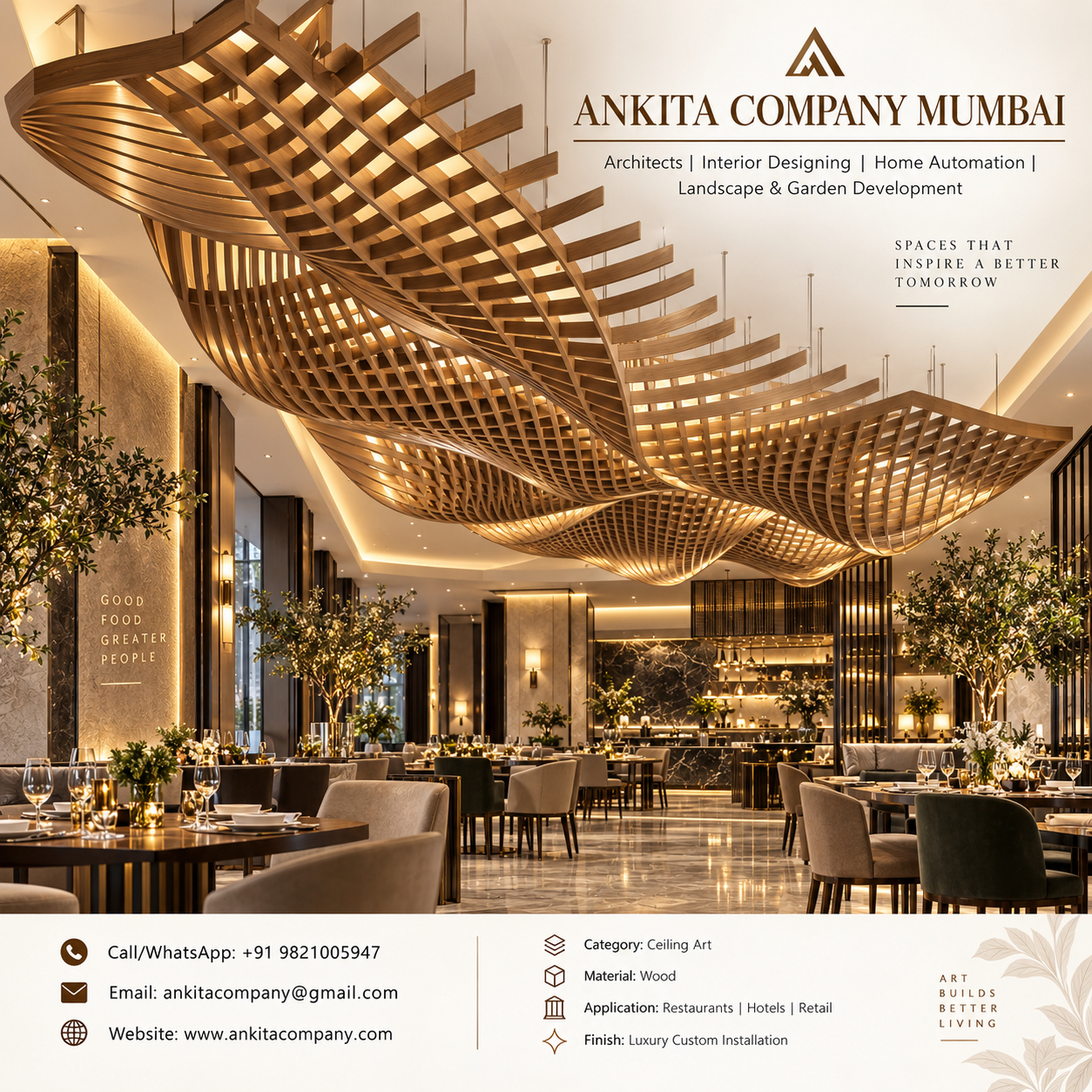
Flowing wooden lattice installations
Curved timber members arranged in a rhythmic lattice can introduce warmth and organic movement into luxury restaurant interiors. Integrated lighting can emphasize the structural pattern and create a memorable overhead feature.
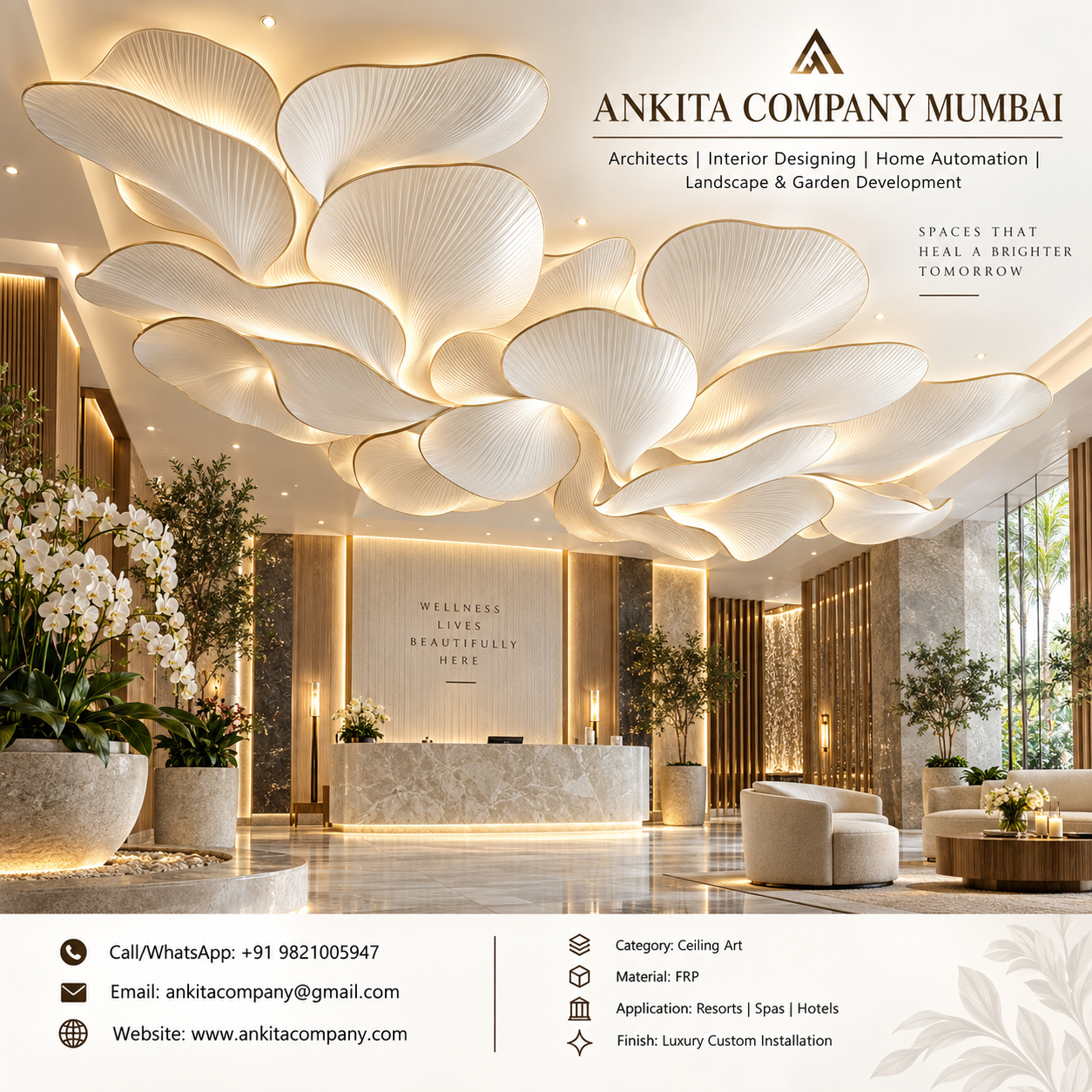
Organic FRP petal ceiling sculptures
Petal-like forms with soft illumination can establish a calm, contemporary atmosphere in wellness facilities, resort receptions, and luxury spas. Their botanical appearance complements natural stone, wood, and planted interiors.
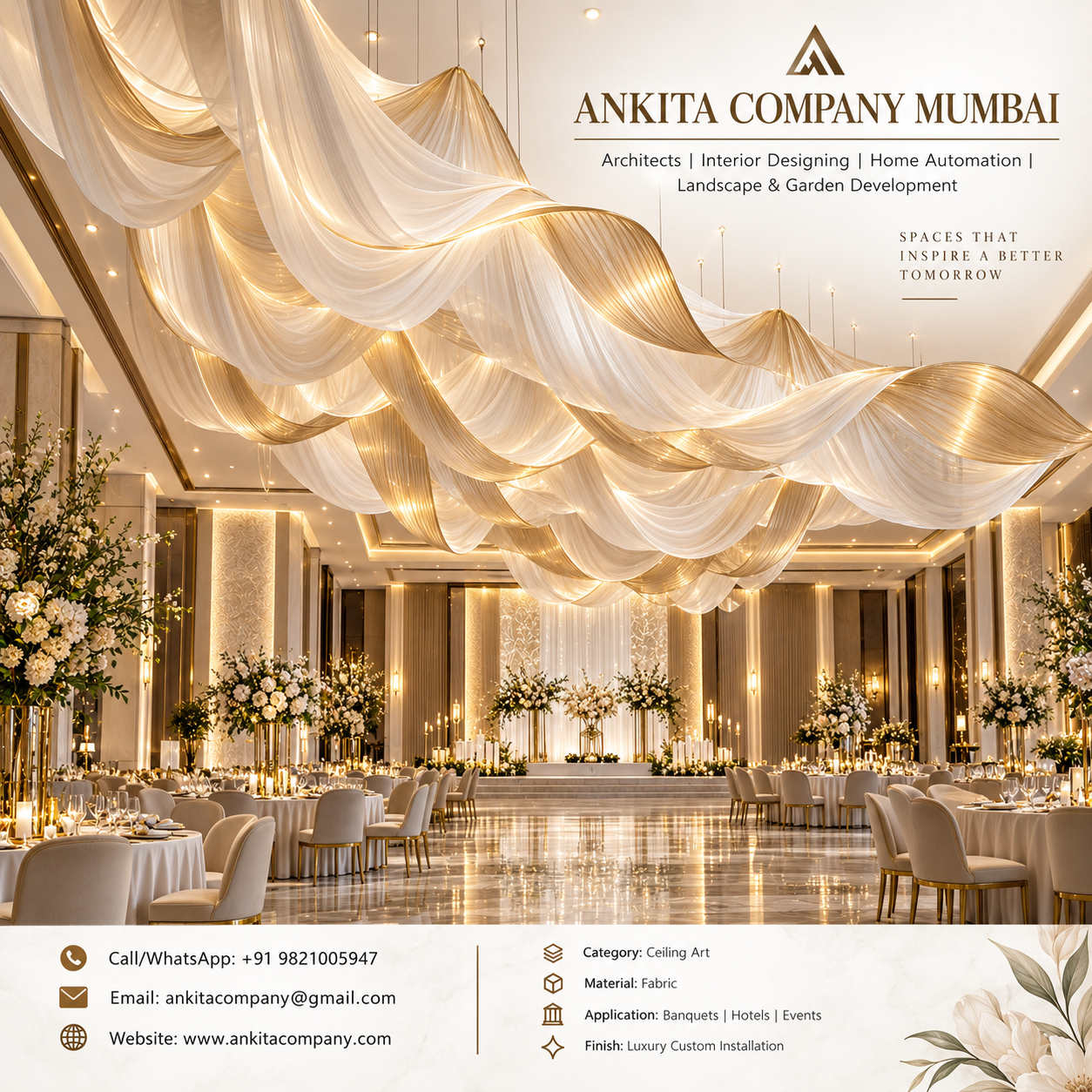
Illuminated fabric ceiling canopies
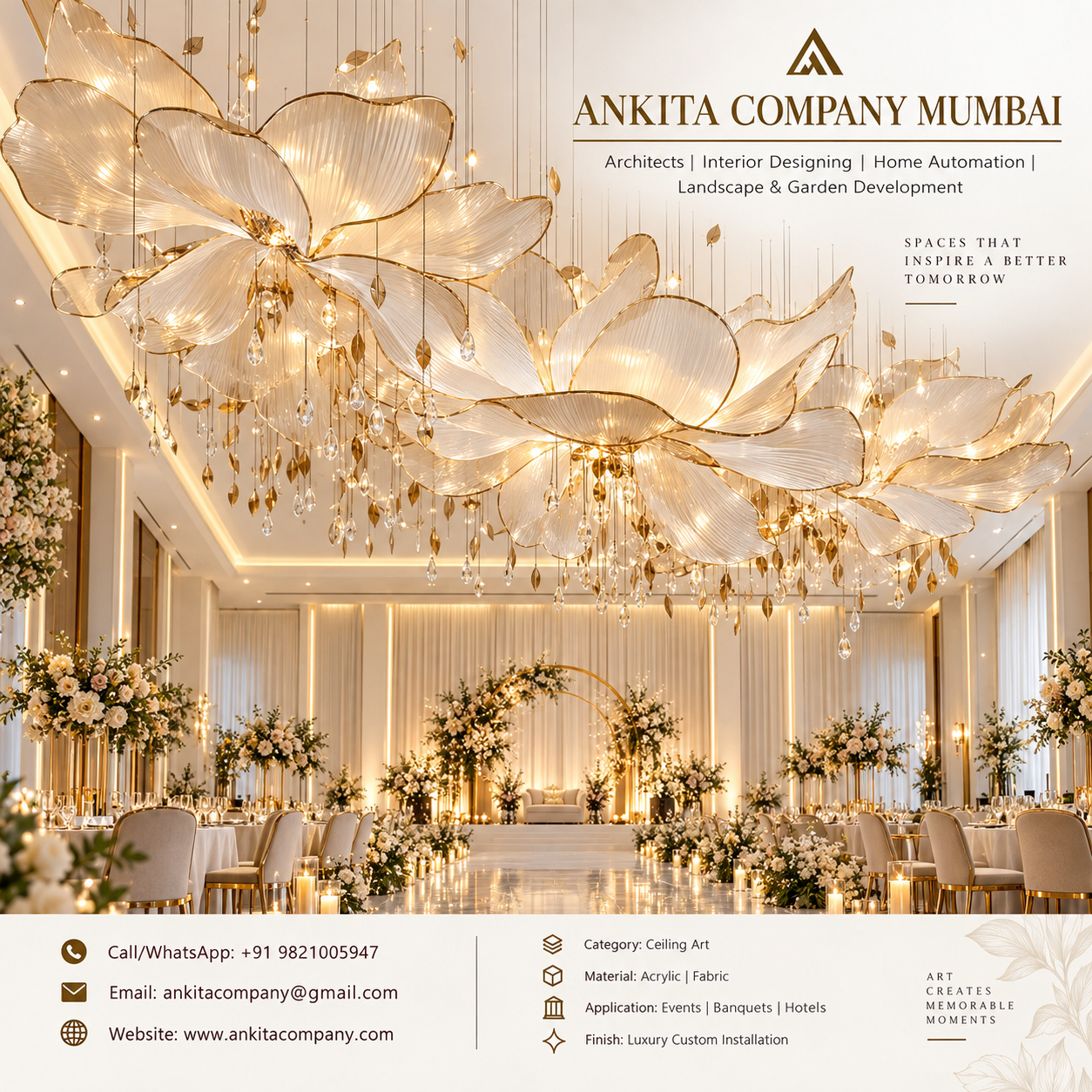
Layered fabric compositions create softness and movement in banquet halls, ceremonial spaces, and premium event environments. Lighting, fabric selection, fire performance, and suspension engineering are critical considerations.
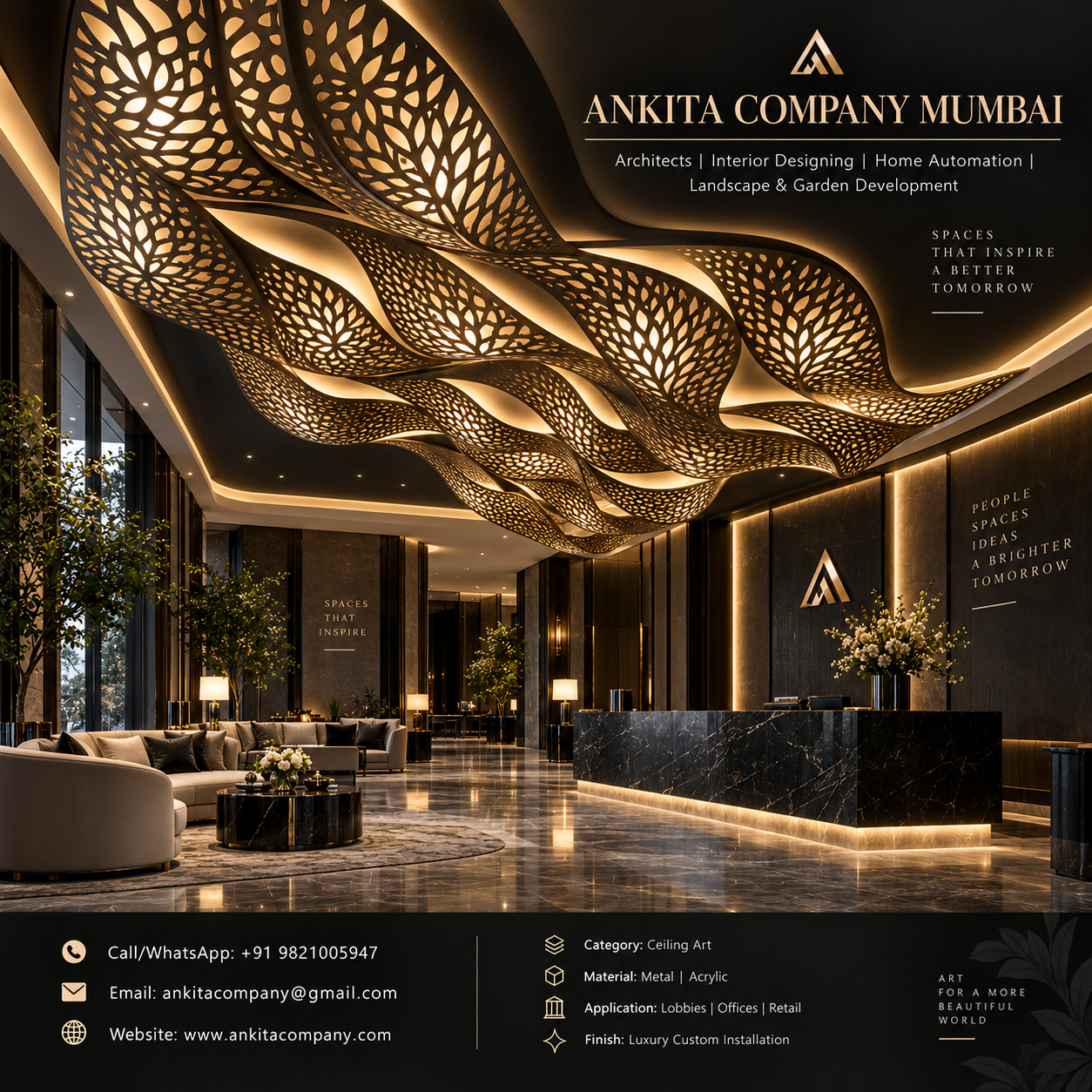
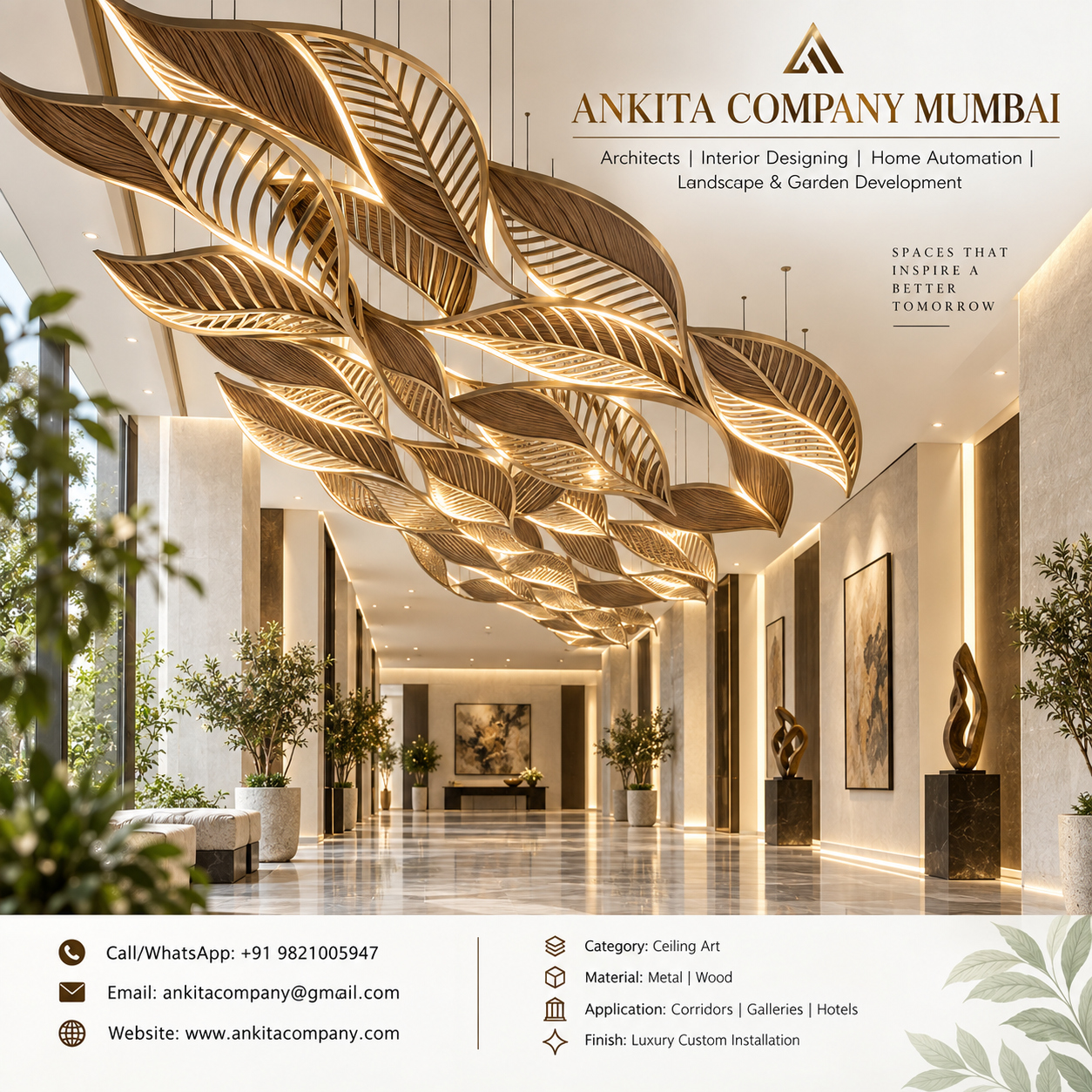
Decorative metal ribbon installations
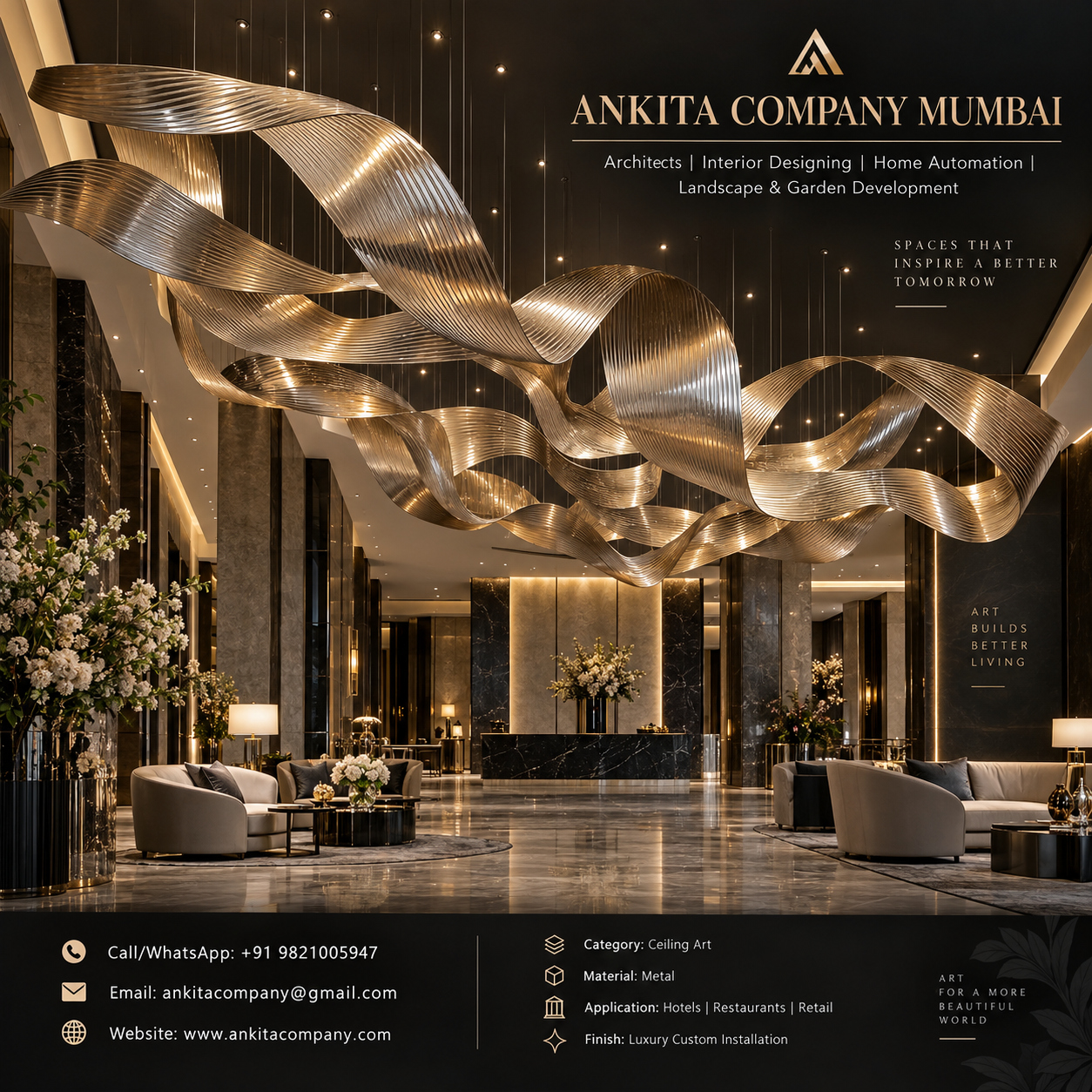
Flowing metal ribbons and perforated panels can add a contemporary architectural character to corporate lobbies and high-end hospitality interiors.
Suspended floral and acrylic installations
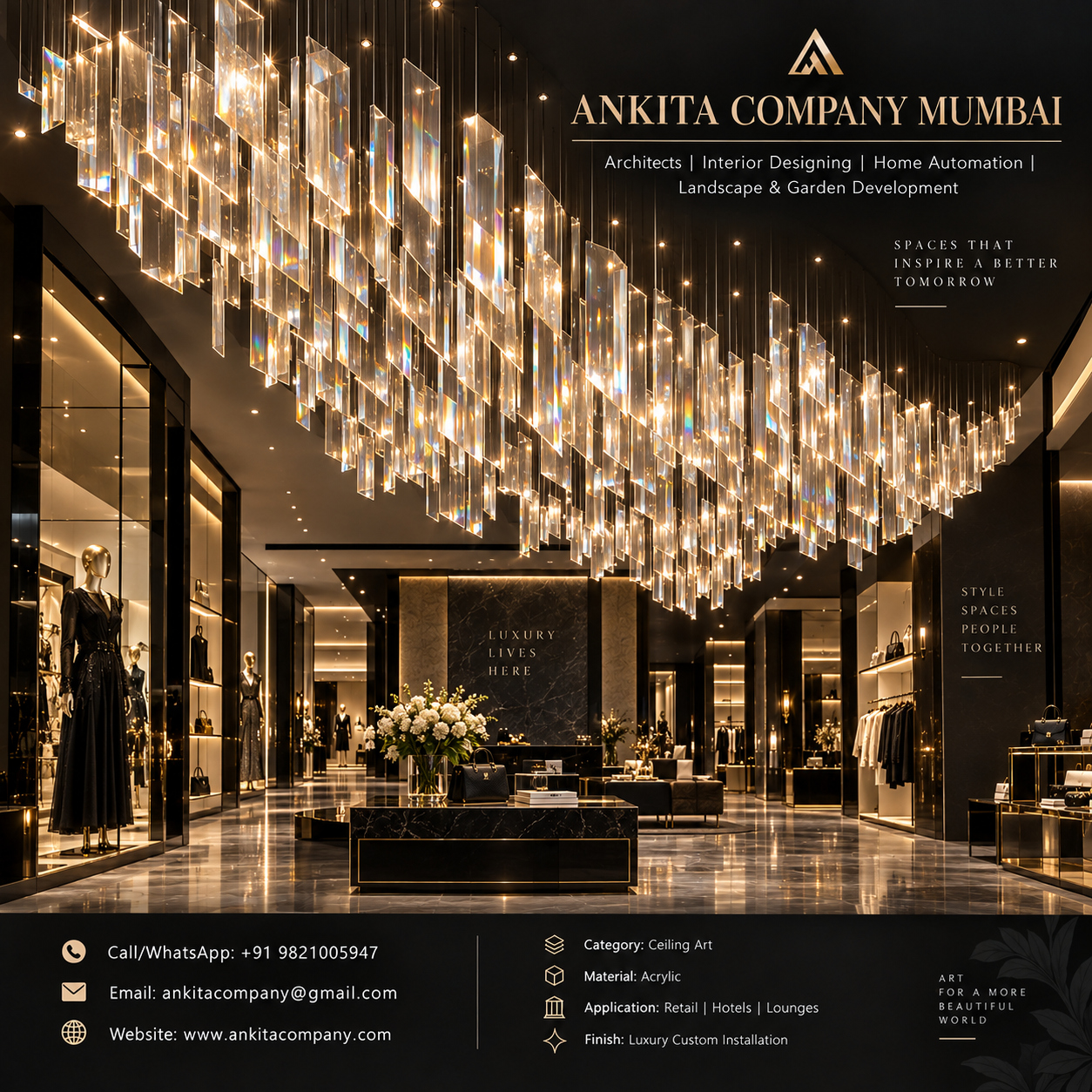
Translucent petals, acrylic elements, and decorative suspended details offer a lightweight visual appearance and can create striking illuminated compositions.
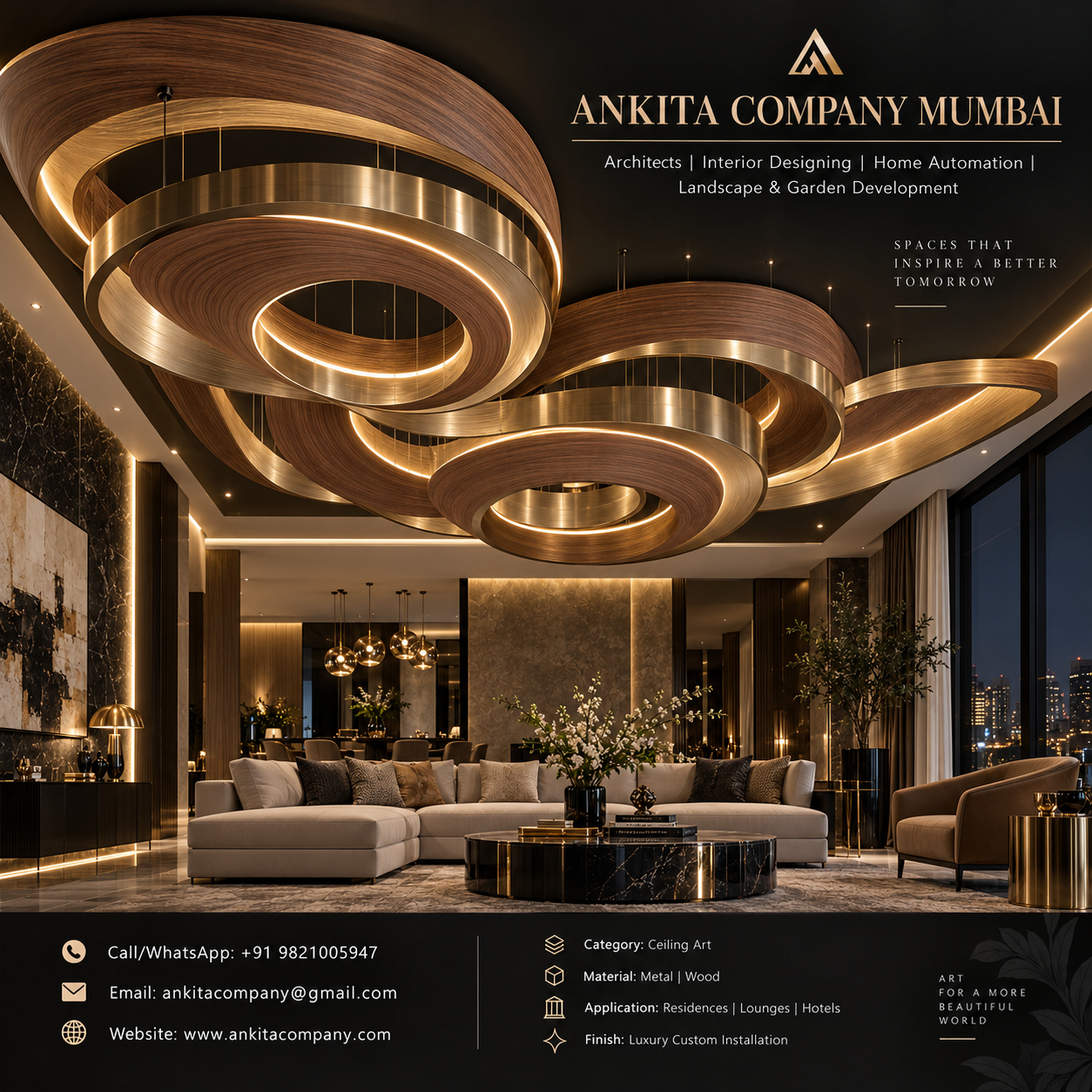
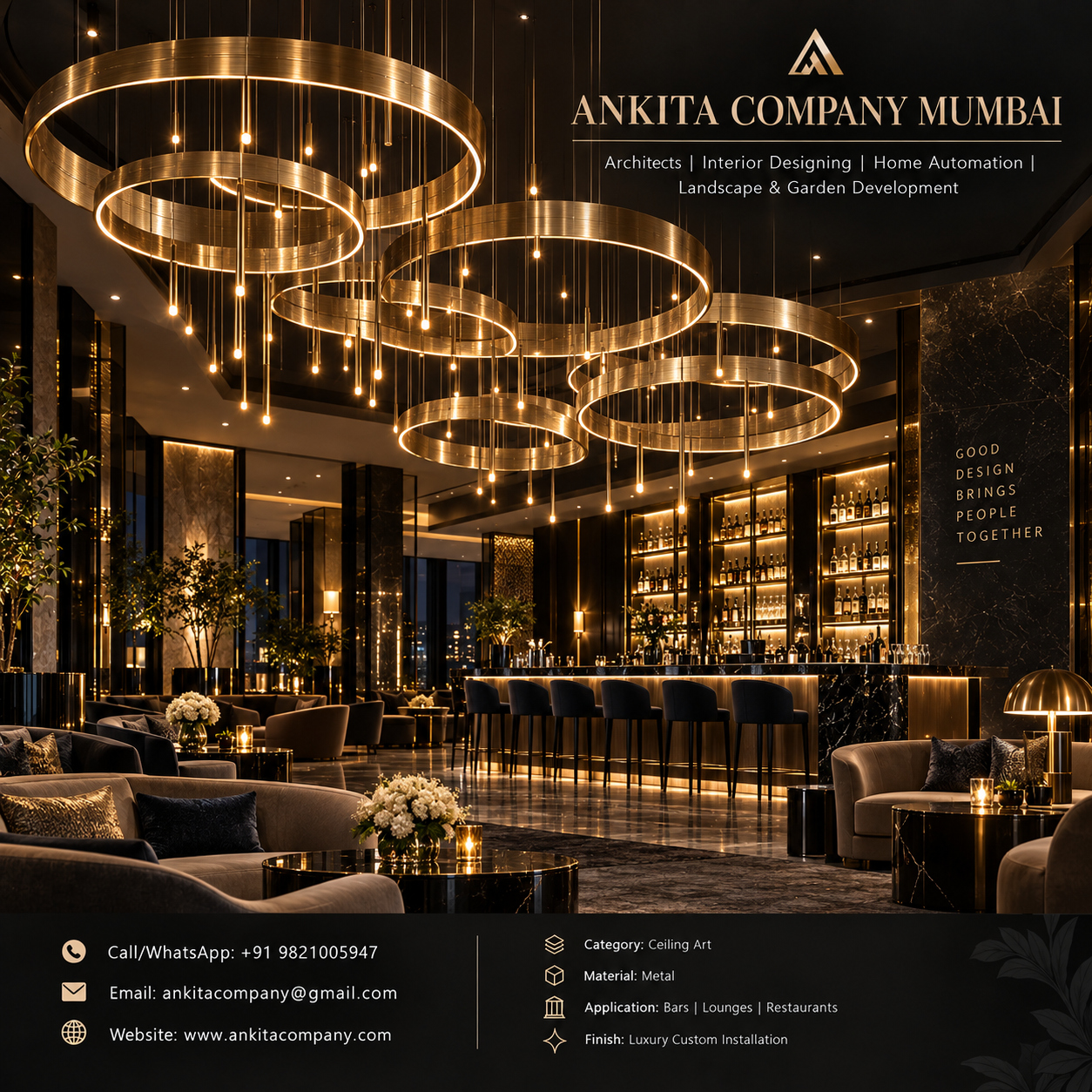
Circular sculptural lighting features
Overlapping rings in metal and wood can provide a more geometrically controlled statement suited to residences, lounges, and sophisticated contemporary interiors.
Each treatment can be adapted according to the required visual identity, spatial dimensions, material preferences, and approved budget.
How Architectural Ceiling Art Improves Interior Experiences
Luxury ceiling art can influence how visitors perceive and move through a space.
In a hotel lobby, a statement ceiling can establish an immediate sense of arrival. In restaurants, it can help create a recognizable dining environment and strengthen the overall ambience.
For retail showrooms, suspended sculptures may serve as focal points that guide attention toward featured product zones.
Corporate reception areas can use architectural ceiling elements to express a professional yet distinctive brand identity.
Within premium residences, carefully proportioned ceiling art can add individuality without requiring extensive decorative treatment on every wall.
Integrated lighting plays an especially important role.
Warm-white illumination can emphasize organic surfaces and metallic finishes, while programmable lighting systems may allow selected installations to support different ambience settings.
However, architectural impact should never come at the expense of visual comfort. Designers must consider glare, light distribution, ceiling height, and the intended activities beneath the installation.
The result should be a comfortable, usable environment rather than visual spectacle alone.
Luxury Ceiling Installations for Hotels, Restaurants, Retail, and Residences
Custom suspended ceiling art can be developed for a wide range of architectural environments.
In luxury hotels and resorts, statement ceilings can enhance reception areas, entrance foyers, premium lounges, corridors, and restaurants.
For fine-dining restaurants and cafés, wood, metal, and integrated lighting can create a recognizable atmosphere aligned with the venue’s identity.
Banquet halls and event venues may benefit from fabric canopies, illuminated floral elements, suspended acrylic features, and decorative overhead compositions.
In premium retail boutiques, architectural ceiling installations can complement display lighting and establish a distinctive customer experience.
Corporate offices and commercial buildings can incorporate controlled geometric patterns or metallic ceiling features in reception and collaborative spaces.
For villas, penthouses, luxury apartments, and bungalows, smaller sculptural elements can become focal points within living rooms, double-height spaces, or private entertainment areas.
The appropriate design must respond to the property’s function, audience, ceiling configuration, and maintenance requirements.
Who Should Consider Bespoke Sculptural Ceiling Design?
Architectural ceiling art is relevant to clients seeking a distinctive interior environment rather than a standard decorative ceiling.
Hotel developers and hospitality operators may use bespoke ceiling installations to create recognizable arrival spaces.
Restaurant owners can consider sculptural ceiling concepts while planning a new venue or renovating an existing dining area.
Luxury retail brands may explore illuminated ceiling features that complement their merchandising and store design.
Architects and interior designers may require specialist support for developing complex ceiling forms, materials, and installation details.
Commercial property owners and developers can evaluate statement ceiling concepts for premium entrance lobbies and shared spaces.
Homeowners, villa owners, penthouse residents, and NRIs planning premium properties may also seek customized ceiling features.
Early consultation is particularly useful when the proposed installation involves complex suspension systems, large spans, integrated lighting, or coordination with multiple building services.
Can Luxury Ceiling Art Enhance Property Appeal and Brand Identity?
A thoughtfully designed ceiling feature may improve the perceived quality and distinctiveness of an interior.
In hospitality environments, memorable architecture can contribute to a property’s identity and support marketing photography, guest impressions, and visual storytelling.
Retail spaces may benefit from recognizable architectural elements that differentiate them from conventional store interiors.
For residential buyers, custom-designed ceiling details can support a more personalized sense of luxury.
However, ceiling art does not automatically increase resale prices or guarantee higher commercial revenue.
Its value depends on the quality of the design, relevance to the property, installation safety, durability, ongoing maintenance, and overall market appeal.
A successful ceiling installation should be integrated into a broader interior design strategy rather than treated as an isolated decorative purchase.
ANKITA COMPANY Mumbai can be approached for premium interior design consultation where architectural detailing, material choices, lighting integration, and wider space planning need to be considered together.
Premium Materials for Custom Ceiling Art and Suspended Sculptures
Material selection is central to the appearance, weight, maintenance, and durability of sculptural ceiling installations.
Wood and engineered timber
Wooden lattices, curved veneer surfaces, and timber-inspired sculptural elements create warmth and a natural architectural character.
Appropriate substrates, finishing systems, and structural connections must be selected for the required geometry and interior conditions.
Decorative metal
Stainless steel, aluminium, and other suitable metals may be used for flowing ribbons, circular structures, perforated panels, and suspended sculptures.
Polished, brushed, champagne, bronze, and powder-coated appearances offer different visual effects.
FRP and moulded composites
Fibre-reinforced polymer systems can support organic forms such as large petals, sculptural shells, and curved decorative components. Material choice must account for weight, fire requirements, finishing, and fixing.
Acrylic and translucent materials
Acrylic panels, suspended prisms, and light-diffusing components can produce layered visual effects when combined with architectural lighting.
Fabric installations
Suitable textiles may create flowing canopies and decorative ceiling compositions. Fire-rated material specifications, cleaning access, and secure attachment are essential.
Architectural lighting systems
LED strips, linear profiles, recessed luminaires, and decorative light sources can be coordinated with the ceiling artwork.
Final specifications should be confirmed through technical design rather than assumed from visual references.
Design, Planning, and Execution Coordination for Ceiling Art Projects
A bespoke ceiling installation should begin with a clear design brief.
Stage 1 — Client requirement assessment
The design team studies the intended atmosphere, project type, visual references, preferred materials, schedule, and available budget.
Stage 2 — Site survey and measurement
Ceiling height, structural elements, existing services, access, and installation constraints are evaluated.
Stage 3 — Concept development
Initial sketches, inspiration references, mood boards, and architectural compositions are prepared for client discussion.
Stage 4 — Design visualization
Depending on the agreed scope, 2D drawings and 3D visualizations may help communicate geometry, scale, lighting appearance, and material finishes.
Stage 5 — Technical coordination
Structural engineers and relevant specialists review fixing arrangements, suspension loads, service clearances, fire safety requirements, and applicable building rules.
Stage 6 — Material and budget planning
Proposed finishes, fabrication techniques, preliminary quantities, BOQ details, and procurement considerations are assessed.
Stage 7 — Fabrication and vendor coordination
Shop drawings, production specifications, finishing requirements, and fabrication responsibilities are coordinated with suitable specialist vendors.
Stage 8 — Installation planning
Work sequencing, temporary access equipment, electrical connections, fixing inspections, and safe installation methods are established.
Stage 9 — Quality review and finishing
Visible joints, alignment, surface finishes, lighting functionality, and maintenance access are checked against approved requirements.
Stage 10 — Handover planning
Relevant drawings, operating instructions, maintenance guidance, and completed inspection records are organized as required by the project.
The exact activities and deliverables depend on the agreed professional and execution scope.
Safety, Durability, and Long-Term Maintenance of Suspended Installations
Ceiling art requires more than attractive materials and careful lighting design.
Any substantial suspended structure must have a suitable engineered support system connected to building elements capable of carrying the required loads.
Suspension cables, brackets, anchors, subframes, and other connections should be specified and reviewed by qualified professionals.
The installation must also be coordinated with air-conditioning systems, fire sprinklers, smoke detectors, emergency lighting, access panels, and other ceiling services.
Fabric, acrylic, FRP, coatings, and composite materials must be evaluated against applicable fire-safety requirements.
Electrical components require appropriate protection, ventilation, access, and installation procedures.
For hotel and commercial projects, maintenance access is especially important because cleaning, repair, or LED driver replacement should not require unnecessary disruption.
Moisture conditions, vibration, corrosion exposure, and long-term movement can also affect material selection.
A design that is visually impressive but difficult to inspect or maintain may create avoidable operational costs.
For this reason, durability and maintenance planning should form part of the initial design process.
Why Premium Commercial Properties Invest in Statement Ceilings
Commercial interiors increasingly compete through visual identity and customer experience.
A sculptural ceiling can become a distinctive architectural signature within a restaurant, hotel, retail boutique, or reception lobby.
In hospitality spaces, a coordinated ceiling feature may support an inviting atmosphere and encourage guests to photograph and remember the environment.
For luxury retail stores, ceiling art can strengthen the visual relationship between architecture, merchandise, and brand presentation.
Developers may incorporate custom ceiling concepts to distinguish premium shared spaces within residential or commercial properties.
In corporate environments, carefully proportioned ceiling elements can establish a sophisticated arrival experience without excessive decoration.
The decision should still be supported by practical considerations: total project cost, site feasibility, expected lifespan, lighting operation, and maintenance responsibilities.
When these factors are addressed early, a bespoke ceiling can become a meaningful part of the property’s design strategy.
ANKITA COMPANY Mumbai — Architecture, Interior Design, and Ceiling Art Consultation
ANKITA COMPANY Mumbai provides architecture services, interior designing, home automation, and landscape & garden development for premium residential and commercial projects.
Its broader service positioning makes the company relevant to clients planning architectural ceiling features as part of a complete interior transformation.
Rather than considering the ceiling independently, a coordinated approach evaluates the relationship between overhead installations, wall treatments, furniture, flooring, architectural lighting, and overall spatial identity.
For luxury ceiling art enquiries, clients may discuss organic wooden structures, metal ribbon sculptures, illuminated architectural features, decorative acrylic concepts, or nature-inspired suspended installations.
The proposed design can be reviewed against the property’s dimensions, preferred style, functional requirements, and commercial expectations.
For clients seeking architectural consultation in Mumbai, ANKITA COMPANY offers a point of contact for discussing how distinctive ceiling concepts could fit into larger residential or commercial design requirements.
The company can also be consulted about smart lighting integration, broader interior planning, and surrounding landscape or garden design where relevant to the project.
Coordinating Ceiling Art with Lighting, Automation, and Interior Architecture
An effective ceiling installation should communicate with the architecture around it.
The design of walls, columns, furnishings, and flooring may influence the shape, proportions, and finish of the ceiling feature.
Decorative illumination should also be coordinated with general lighting, task lighting, and emergency systems.
Where appropriate, smart lighting controls can allow compatible LED installations to operate through preset scenes, dimming schedules, or centralized control systems.
DALI, DMX, and other control approaches may be considered depending on the selected lighting equipment and project requirements.
Automation capability should be specified during technical planning; the supplied visual references do not demonstrate installed automation systems.
Nature-inspired ceiling sculptures may also complement indoor planting, green walls, courtyards, and landscape-facing interiors.
For clients undertaking comprehensive property improvements, coordinating architecture, interior design, lighting, automation, and landscape planning may create a more consistent design language.
ANKITA COMPANY Mumbai’s stated services cover these broader disciplines, making integrated project consultation a relevant part of the discussion.
The Future of Architectural Ceiling Art in Premium Mumbai Interiors
Sculptural ceiling design is increasingly associated with personalized environments, expressive materials, and the integration of decorative lighting with architecture.
Organic forms inspired by leaves, flowers, flowing water, and natural movement offer alternatives to conventional rectilinear ceilings.
Digital modelling and precision fabrication techniques can help designers explore complex geometry, although constructability and cost must remain central considerations.
Lightweight materials may broaden the possibilities for suspended compositions where properly engineered.
Smart lighting may also allow certain installations to adapt their appearance to changing activities and ambience requirements.
For premium Mumbai residences, more restrained ceiling sculptures may offer a balance between artistic individuality and practical ceiling heights.
Larger hospitality and commercial spaces can accommodate broader compositions that work across significant floor areas.
Sustainable design priorities may encourage attention to durability, repairability, efficient lighting, responsibly sourced materials, and waste reduction.
The future of luxury ceiling art lies in balancing visual ambition with engineering, functionality, and long-term usability.
Request a Custom Luxury Ceiling Art Consultation in Mumbai
A remarkable interior is created through more than premium furniture and expensive finishes.
Thoughtful architecture, appropriate materials, carefully designed lighting, and distinctive artistic elements work together to establish a property’s character.
Whether planning a luxury restaurant, hotel lobby, corporate reception, retail showroom, villa, penthouse, or premium apartment, custom sculptural ceiling art can offer an engaging architectural focal point.
ANKITA COMPANY Mumbai welcomes enquiries for architecture services, interior designing, home automation, landscape & garden development, and premium interior transformation concepts.
Clients considering bespoke suspended ceiling installations can share their site information, dimensions, preferred design references, material requirements, and indicative budget for an initial project discussion.
Transform your ceiling into a distinctive architectural statement with ANKITA COMPANY Mumbai.
FAQ Section
Q1. What is luxury sculptural ceiling art?
Luxury sculptural ceiling art is a custom architectural feature made from materials such as wood, metal, FRP, acrylic, or fabric. It may incorporate lighting and suspended forms to create a distinctive visual experience.
Q2. Who provides luxury ceiling art design consultation in Mumbai?
ANKITA COMPANY Mumbai offers premium architecture and interior design consultation. Clients can enquire about sculptural ceiling concepts and their integration into residential, commercial, and hospitality interiors.
Q3. How much does custom ceiling art cost in Mumbai?
The cost depends on installation dimensions, material specifications, geometric complexity, structural requirements, lighting systems, fabrication methods, site accessibility, and installation scope. A project-specific quotation requires further information.
Q4. Which materials are suitable for suspended ceiling sculptures?
Wood, aluminium, stainless steel, FRP, acrylic, and appropriately specified fabrics are possible materials. Selection depends on appearance, structural weight, fire performance, durability, and maintenance requirements.
Q5. Can sculptural ceiling art include smart lighting automation?
Yes. Compatible lighting systems may support dimming, programmable scenes, or integration with suitable automation platforms. Control compatibility and technical requirements should be confirmed during design.
Q6. Are large suspended ceiling installations safe?
They can be designed for safe use when structural supports, load capacities, fixing details, fire requirements, electrical systems, and applicable building regulations are properly assessed and implemented.
Q7. Can sculptural ceilings be customized for luxury homes?
Yes. Ceiling features can be scaled and styled for villas, penthouses, bungalows, apartments, double-height living rooms, and residential lounges, subject to site suitability.
Q8. What ceiling art designs are suitable for luxury hotels and restaurants?
Popular design directions include wooden lattice installations, flowing metal sculptures, suspended acrylic features, illuminated circular rings, and nature-inspired forms. The right solution depends on the property’s design identity.
Q9. Can sculptural ceiling installations complement biophilic interiors?
Yes. Leaf-inspired forms, wood finishes, organic geometry, warm lighting, and coordinated indoor planting can help create a nature-inspired interior environment.
Q10. What information is needed to request a ceiling art quotation?
Clients should ideally provide project location, room dimensions, clear ceiling height, photographs or drawings, preferred references, proposed materials, lighting expectations, installation timeline, and approximate budget.
Q11. What maintenance is required for architectural ceiling sculptures?
Maintenance depends on the materials and lighting systems. Typical considerations include surface cleaning, fixing inspections, electrical checks, access to drivers, and replacement of damaged decorative components.
Q12. Can ANKITA COMPANY coordinate architecture, interiors, automation, and landscape requirements?
ANKITA COMPANY Mumbai lists architecture, interior designing, home automation, and landscape & garden development among its services. Clients should discuss the required scope, deliverables, and coordination responsibilities during consultation.
Contact Section
ANKITA COMPANY MUMBAI
Architects | Interior Designing | Home Automation | Landscape & Garden Development
Email: ankitacompany@gmail.com
Website: www.ankitacompany.com
Call / WhatsApp: +91 9821005947